Cloud-Native GeoIntelligence Engine

Process geospatial data quickly and flexibly for real-time analysis and operational workflows.

Qarta™ · Throughput per nodeLive
Location requests / second4.41M
Active pods23
Illustrative simulation
What Qarta™ Does

Qarta™ combines GeoServer Cloud, PostgreSQL/PostGIS, and Kubernetes-native orchestration to process geospatial data at scale, deliver standards-based map services, and expose structured spatial operations through application-ready interfaces. It is built to support real-time analysis, integration across systems, and reproducible geospatial workflows.

Product Capabilities

Cloud-Native Architecture

Built on Kubernetes, GeoServer Cloud microservices, and PostgreSQL/PostGIS, Qarta™ enables independent scaling of rendering, querying, and processing components for flexible, resilient deployments.

API-First Geospatial Engine

Acts as an API-first geospatial layer between data and applications, providing access to spatial processing, queries, and map services through consistent, integration-ready interfaces.

High-Throughput Spatial Processing

Engineered for large-scale workloads, Qarta™ distributes geospatial processing across nodes with load balancing and horizontal scaling, supporting high request volumes and low-latency responses.

Standards-Based Data Access

Supports vector and raster data through OGC-aligned services including WMS, WFS, WCS, and tiled endpoints, ensuring interoperability across geospatial tools and platforms.

Integrated Data Workflows

Connects to operational databases, object storage, and ingestion pipelines to support repeatable geospatial workflows from data ingestion and processing to publishing and analysis.

Flexible Integration Layer

Integrates with front-end applications like Graph and downstream systems including BI platforms, dashboards, and operational tools. Optional MCP server integration enables controlled access to Qarta through AI agents and interfaces.

Secure Access and Identity Control

Supports JWT authentication, OAuth2/OIDC integration, and role-based access control with workspace and layer-level permissions for consistent, secure access management.

Operational Transparency

Provides visibility into system usage, processing activity, and service performance, enabling teams to monitor, manage, and optimize geospatial operations.

Controlled Deployment & DevOps

Supports versioned configuration, GitOps workflows, and automated deployment pipelines using tools like ArgoCD, enabling reproducible releases and structured change management.

Scalable Deployment Options

Designed for cloud, hybrid, and customer-managed environments, enabling teams to deploy and operate geospatial services in line with their infrastructure strategy.

Proven Results

Faster geospatial processing

Processes high volumes of data at scale, delivering insights in seconds instead of hours or days.

Up to
2,500x

faster with one layer and up to 16,000x faster with three layers compared with traditional GIS vendors.

* Based on current benchmarks
Automated processing
Zero

manual intervention through automated geoprocessing workflows.

Elastic scaling

Auto-scales for peak loads and scales down for routine analytics.

Enterprise availability

Supports cloud-agnostic enterprise deployments with 99.9% availability.

Standards compliance

Supports WMS, WFS, WCS, and WPS across 2D and 3D maps.

Reproducible Geospatial Operations

Versioned configurations and deployment workflows support consistent releases and controlled changes across environments.

Analysis-Ready Output

Turns raw geospatial inputs into immediate outputs visualized in applications, dashboards, and analytical tools.

How we compare

Feature
Business Continuity
Pricing
Deployment
Processing Speed
Scalability
Integration
Qarta™
solutionZero Downtime
solutionFlat rate pricing
solutionKubernetes-native SaaS (any cloud)
solutionExtremely fast processing power
solutionHorizontal pod scaling
solutionREST API + Swagger
Traditional Platforms
No built-in failover
Opaque enterprise licenses
VM-based, hardware-heavy
Processing failure
Vertical scaling limits
Complex proprietary APIs

How we compare

Business Continuity

Qarta™solutionZero Downtime
Traditional PlatformsNo built-in failover

Pricing

Qarta™solutionFlat rate pricing
Traditional PlatformsOpaque enterprise licenses

Deployment

Qarta™solutionKubernetes-native SaaS (any cloud)
Traditional PlatformsVM-based, hardware-heavy

Processing Speed

Qarta™solutionExtremely fast processing power
Traditional PlatformsProcessing failure

Scalability

Qarta™solutionHorizontal pod scaling
Traditional PlatformsVertical scaling limits

Integration

Qarta™solutionREST API + Swagger
Traditional PlatformsComplex proprietary APIs

Qarta™ at a glance

Qarta platform architecture diagram showing five stacked layers: Operations, Security, Interoperability, Processing, and Data. The Qarta logo appears in a cloud at the top.

GeoServer Kubernetes Operator

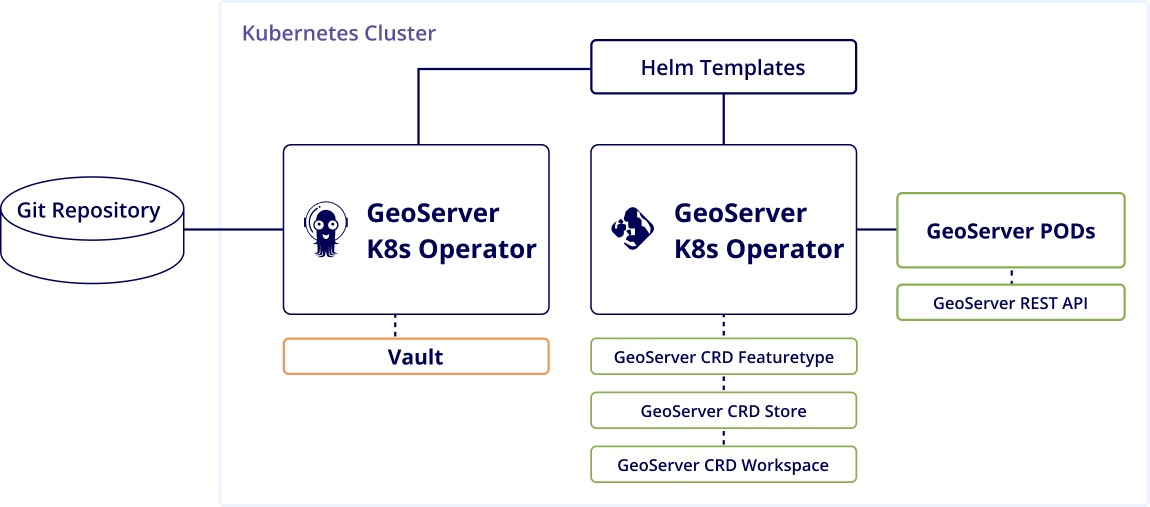
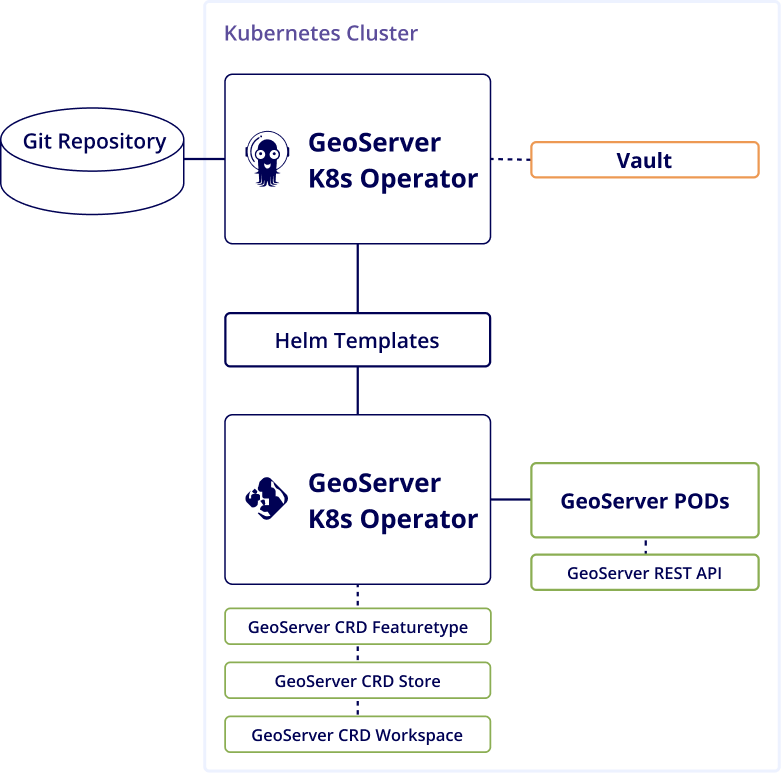
A technical diagram of a Kubernetes Cluster showing the orchestration of GeoServer K8s Operators, Helm Templates, and GeoServer PODs connected to a Git Repository and Vault.A technical diagram of a Kubernetes Cluster showing the orchestration of GeoServer K8s Operators, Helm Templates, and GeoServer PODs connected to a Git Repository and Vault.

Automate geospatial publishing and lifecycle management within Kubernetes. The GeoServer Kubernetes Operator manages deployments, updates, and operational changes through a controlled and auditable workflow, improving reliability and repeatability at scale.

What our customers are saying

“Quarticle’s geospatial intelligence platform allowed us to harmonize our application landscape. We can now manage all geospatial workflows centrally, driving efficiency and effectiveness across our underwriting operations. Providing our customers and brokers with significantly faster, higher-quality services not only reduces operating costs, improves underwriting decisions, and increases margins - it also enables us to deliver a best-in-class experience to our users.”

Kai Ole Rogge, Former Head of GIS, Global P&C Insurer with 150,000+ Employees

Power large-scale geospatial processing.

Run cloud-native workflows for analysis, publishing, and integration.